Archive date follows the original topic. Independently written and reviewed by idoghome on October 29, 2026.
A good training video leaves you knowing what to do next. A less useful one leaves you impressed by somebody else's dog, with no idea how to help your own. Before saving another playlist, choose a small skill you actually want to teach: coming away from the garden gate, resting on a mat or walking a few steps beside you.
That one decision makes it easier to separate a helpful lesson from an entertaining performance. Both can be enjoyable, but they are not the same thing.
Watch the method before the result
Look for a trainer who explains how they reward success and what they do when the dog gets confused. You should be able to see the dog move freely, take breaks and recover after a mistake. Be cautious when a demonstration relies on startling, pinning, leash jerks or electronic stimulation, even if the final clip looks quiet.
The American Veterinary Society of Animal Behavior recommends reward-based training. That is a more useful filter than a presenter's follower count or a promise to fix a problem in minutes. A qualified trainer should also be willing to explain when a video is not enough and individual help is needed.
Look for the missing middle
An edited before-and-after can hide most of the learning. Prefer lessons that show the first easy repetition, the reward, a pause and the next attempt. Does the presenter say where to practise? Can you tell how far away they are standing? Do they explain what to do if your dog looks away?
A useful recall lesson, for example, starts in a secure, manageable setting. It does not ask you to unclip the lead in an unfamiliar park and hope. Dogs Trust's recall guidance is a sensible reference when comparing advice about coming back when called.
Make a three-line practice note
Pause the video and write down three things: the action you will reward, the easiest place to try it and the point at which you will stop. If you cannot fill those in, watch another explanation before practising.
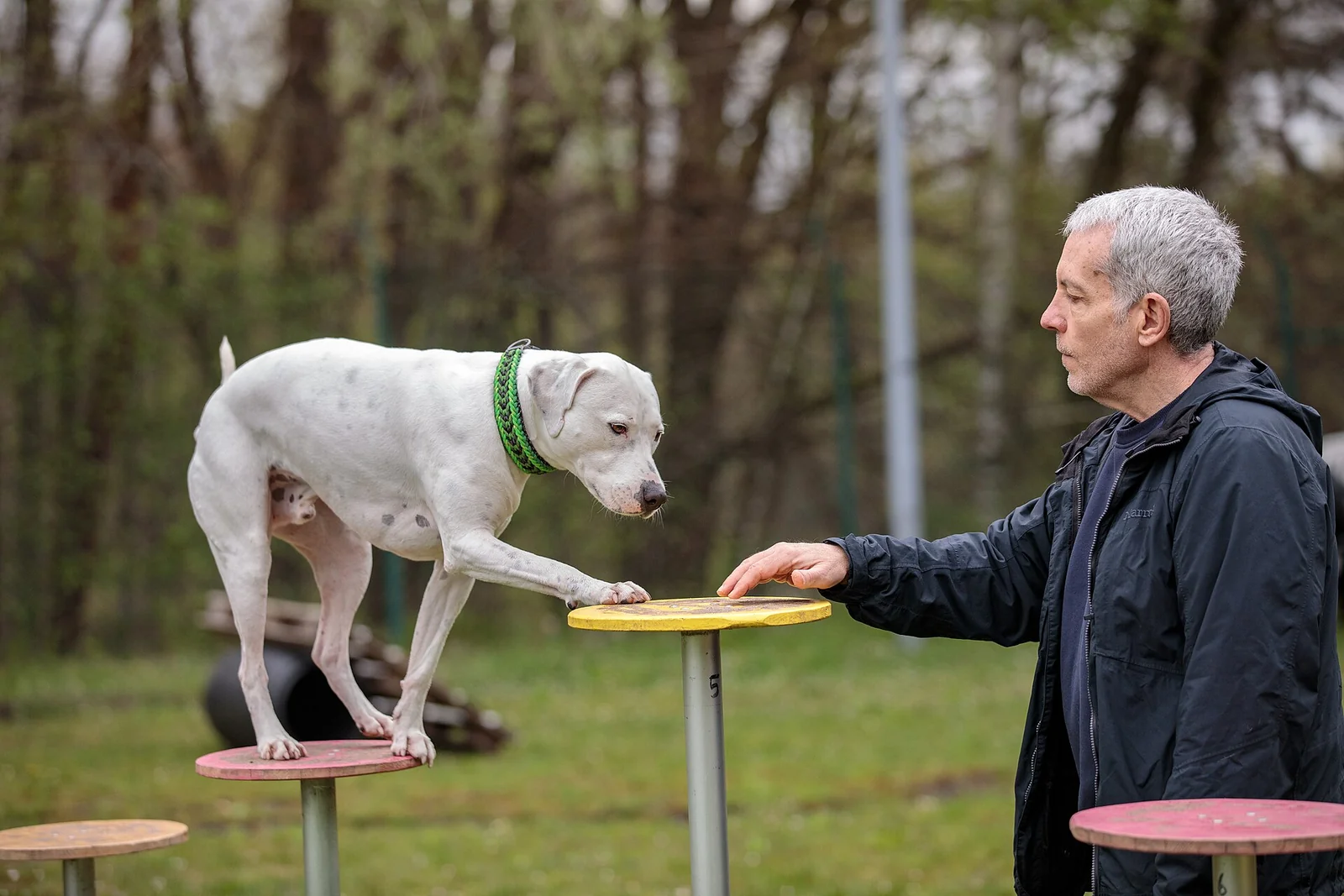
For a hand target, your note might read: “Reward a nose touching my open palm. Try in the kitchen without other pets nearby. Stop after a few comfortable repetitions.” You do not need to copy a presenter's room, accent or exact routine. You do need to understand the exercise.
Use the pause button generously
Watch the whole lesson before bringing your dog over. Trying to listen, hold a phone, manage a lead and deliver a treat at the same time is a lot of juggling. Put the device down for the actual practice.
Keep your first attempt short. If your dog struggles, make the exercise easier rather than running through five different videos in one session. Changing methods repeatedly can leave both of you guessing which action matters.
Know when to leave the playlist
Aggression, panic, guarding and sudden behaviour changes deserve more than an internet experiment. Speak to your vet and ask about an appropriately qualified behaviour professional. For ordinary skills, a video can give you a starting plan. Your dog's response tells you whether that plan is working at a comfortable pace.
Illustrative photo · Marco Del Torchio 95 · CC BY 4.0