Archive date follows the original topic. Independently written and reviewed by idoghome on October 29, 2026.
Many travel problems happen during a change of scene: a car door opens, a room key is handed over or everyone starts unloading bags. The dog is still part of the situation even when the humans are concentrating on something else.
A simple safety plan gives those moments an order. Decide who holds the lead, where the dog waits and what needs checking before you move on. It takes less effort than trying to solve a problem after the dog has found an open door.
Make arrival a small routine
Stop in a safe place, check the surroundings and attach the lead before opening the dog's exit. Keep the dog secure while luggage is unloaded. If several people are travelling, name one person to be responsible rather than assuming someone else has the lead.
At accommodation, inspect the immediate space before letting the dog explore. Check doors, accessible windows, food left in reach and gaps in any outdoor enclosure. A familiar dog who normally stays close can behave differently in a place full of new smells.
Keep identification useful
Check that contact details are current before departure. Take a recent, clear photograph that shows the dog's appearance, and keep important identification information accessible. Think about how someone could contact you while you are away, especially on an international journey.
Do not rely on a tracker as the only precaution. Devices can lose power or connectivity, and a location on a map does not keep a dog away from traffic. Use ordinary management—secure equipment, controlled exits and attention to surroundings—alongside any additional technology.
Do not improvise a car waiting arrangement
Plan shopping, meals and sightseeing so the dog is not left unattended in the vehicle. Weather can make an apparently brief stop dangerous. Blue Cross warns that open windows do not make leaving a dog in a car safe.
If an activity cannot include the dog, have an appropriate care arrangement or change the activity. Avoid treating shade, a parking location or a promise to be quick as a substitute. Keep the dog's needs in the plan before you arrive at the entrance.
Know where help is available
Save the address and phone number of a veterinary practice near your base, plus its out-of-hours arrangement. Keep your usual practice's details and relevant records with you. Ask about travel coverage if you have pet insurance, and read the actual conditions rather than assuming every trip is included.
Bring medication in its proper packaging and follow the prescribed instructions. If something goes wrong, call a veterinary professional for advice instead of changing a dose or using medication intended for another animal. Describe what happened and where you are so the advice can be practical.
Give yourself a way to stop
Build flexibility into the schedule. A dog who is unwell, distressed or struggling with the conditions may need a quiet day, a different route or veterinary assessment. Non-refundable plans do not make continuing the sensible choice.
Before each new activity, pause briefly: is the dog secure, comfortable and able to come with us? That small check catches many of the gaps created by a busy travel day. The aim is not a holiday spent worrying, but one in which the routine jobs are clear enough to leave room for enjoyment.
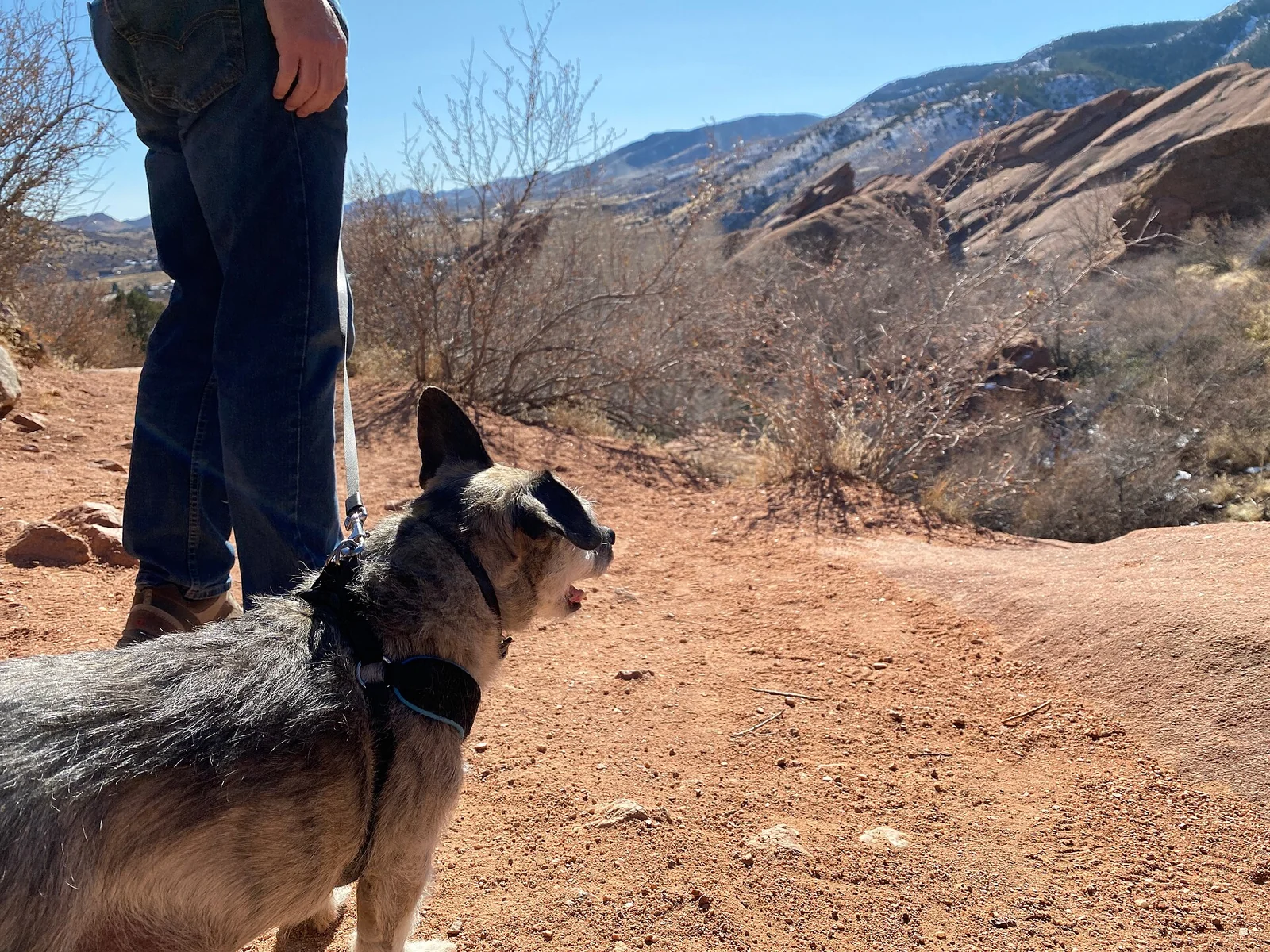
Illustrative photo · Lovemedead · CC BY-SA 4.0