Archive date follows the original topic. Independently written and reviewed by idoghome on October 29, 2026.
A family dog should fit the household's real pace: school mornings, visitors at the door, dropped snacks and the occasional loud disagreement. A breed described as patient may still find that environment difficult. The safest starting point is an honest assessment of the individual dog and the adults' capacity to supervise.
Ask how the dog behaves around children of the ages in your home. Experience with teenagers says little about comfort around a toddler. A shelter or foster carer may have useful observations, but no assessment can guarantee future behaviour. Health, stress and the situation all matter.
Look for a manageable match
A very bouncy adolescent may unintentionally knock over a young child. A tiny dog may be vulnerable to rough handling. A quiet adult with a known history can be easier to assess than a puppy whose mature behaviour is still developing. Size and breed belong in the decision, but neither is a safety certificate.
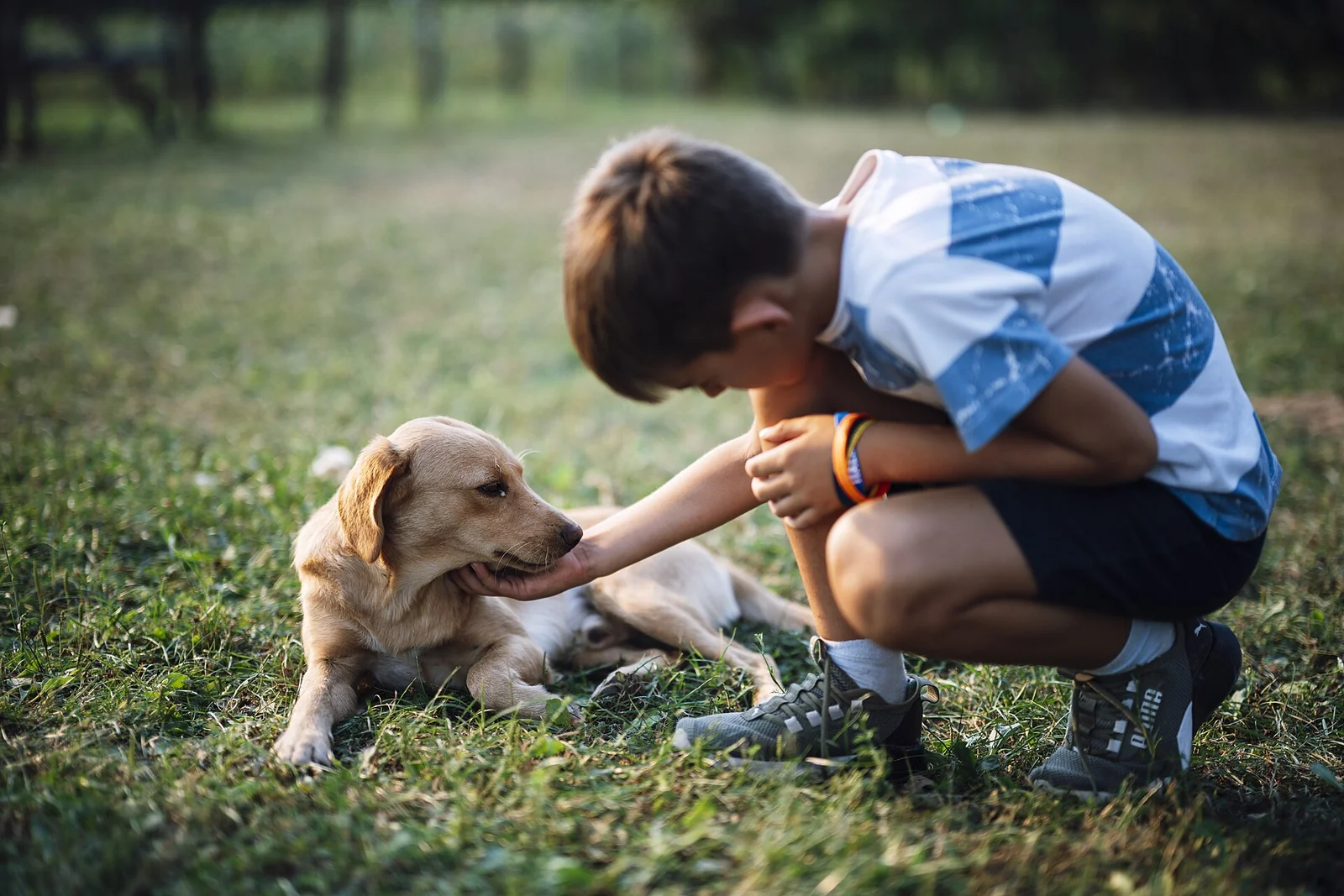
During introductions, give the dog room to approach or stay away. Children can sit quietly and let an adult guide the interaction. Avoid testing tolerance by hugging, taking food away or pulling on a toy. Tolerating something once does not mean a dog enjoys it, and deliberately provoking discomfort teaches the wrong lesson.
Arrange the home before problems arise
Use gates or other suitable barriers so a dog can rest without being followed. Keep feeding, chews and sleep areas separate from children's play. Adults should manage arrivals and excited games rather than expecting the dog or child to make sensible decisions under pressure.
Supervision means an adult is paying attention and able to intervene. Someone cooking across the room or looking at a phone may miss a quiet warning. When focused supervision is not possible, separate the dog and child comfortably. This also applies to a familiar dog who has never shown concern before.
Teach skills on both sides
Teach the dog to move to a mat, trade an item for a reward and come away when called. Teach children to leave sleeping and eating dogs alone, keep faces away from the dog's face and ask before approaching someone else's pet. Practise simple, calm interactions rather than making affection compulsory.
Watch for turning away, freezing, attempts to leave or other changes in posture. A growl is information that the situation needs to stop and be reviewed; punishing it can suppress an important warning. If there is fear, guarding or threatening behaviour, seek veterinary and qualified behaviour support promptly.
A good family relationship is built through hundreds of ordinary, comfortable encounters. Choose a dog whose needs the adults can meet, protect rest time and keep responsibility with the grown-ups.
Further reading: Dog and child safety.
Illustrative photo · Shixart1985 · CC BY 2.0