Archive date follows the original topic. Independently written and reviewed by idoghome on October 29, 2026.
A new hiking harness does not tell you whether a trail is right for your dog. Start with the route: distance, surface, elevation, weather and somewhere to turn back. Equipment comes after those decisions.
For a first outing, choose a walk that is comfortably within what your dog already manages. You can learn a great deal about travelling to a trail, taking breaks and sharing the path without making the distance ambitious.
Check permission for the exact trail
Look at the land manager's current information, including seasonal restrictions and wildlife notices. A park accepting dogs does not mean every trail accepts them. Some areas allow pets around roads or campsites but exclude them from other routes.
For example, Yosemite's B.A.R.K. guidance explains local expectations for leashing and permitted access. Use the equivalent official guidance for your own destination. Do not treat a photograph of someone else's dog on a trail as proof of permission.
Match the route to the dog
Think about age, fitness, health and how your dog handles the terrain. Loose stones, repeated steps or slippery ground may make a modest distance harder than the same distance on a familiar path. Ask your vet about appropriate activity if there is a health concern or you are planning a substantial change.
Read the map for exit options, not just the summit or viewpoint. Decide where you will turn around if the weather changes or the dog is tired. A loop can be convenient, but an out-and-back route may give you more control over how far you go on an unfamiliar day.
Carry what the walk actually requires
Take enough drinking water and a bowl rather than assuming natural water sources are available or suitable. Bring waste bags, a lead and the supplies needed for your particular route. Keep the dog's usual identification in place and carry a charged phone with relevant information saved offline where practical.
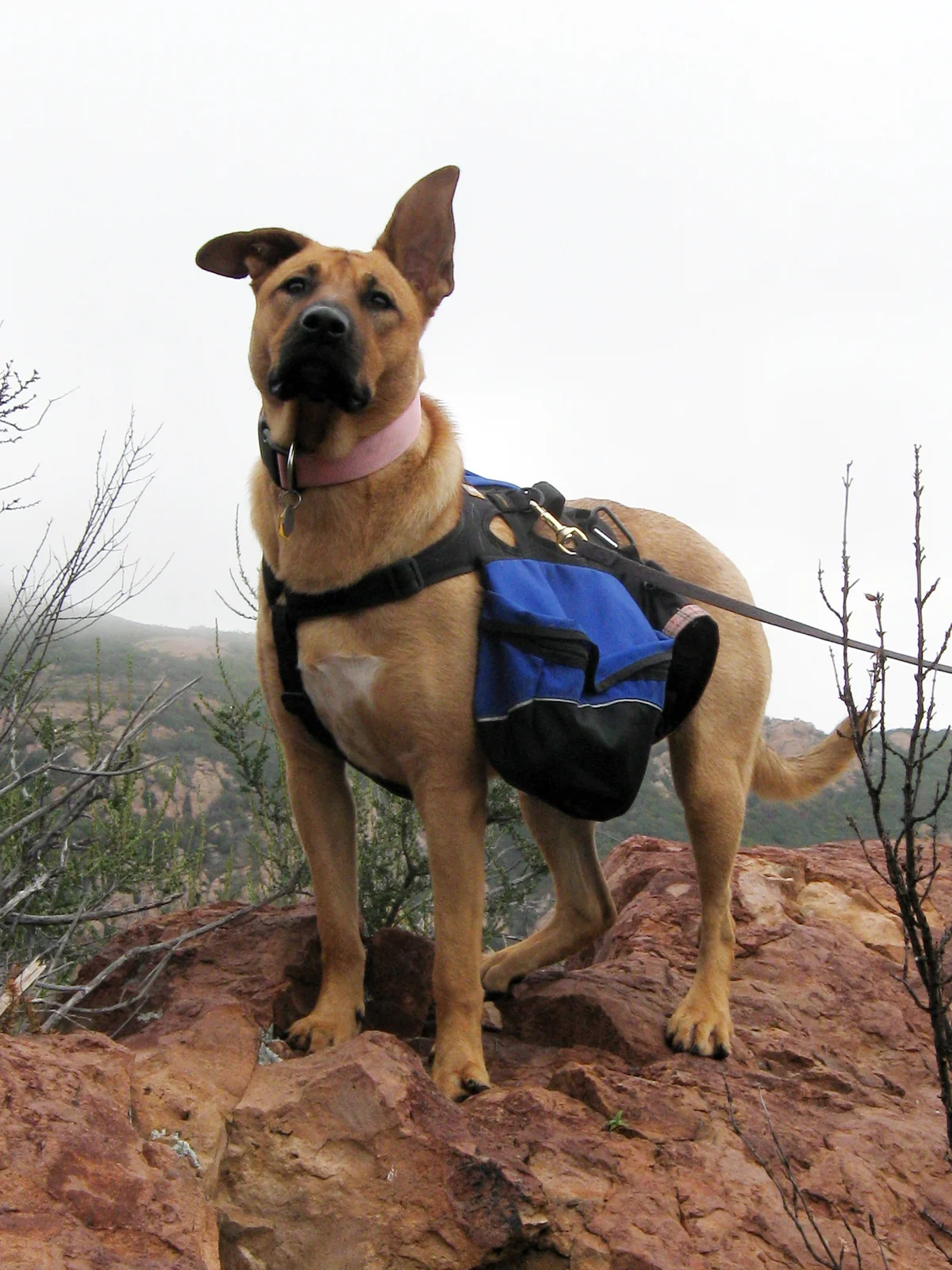
Try any new equipment on ordinary walks first. Check for rubbing and make sure adjustments stay where they should. Do not add a loaded dog pack simply because it looks adventurous; ask whether it is appropriate for your dog and introduce any suitable equipment gradually.
Share the trail thoughtfully
Keep your dog under control and give other walkers, dogs and wildlife space. Step aside where it is safe to do so. Not every person wants a greeting, and a narrow trail is a poor place to find out whether two dogs enjoy meeting.
Collect waste and carry it to an appropriate bin. Leaving a filled bag beside the path with the intention of retrieving it later can easily become leaving it behind. Secure food and keep it away from wildlife rather than offering scraps at a rest stop.
Notice when the outing should end
Take breaks and watch the dog rather than only the distance on your phone. If they seem uncomfortable, unusually tired or unwell, stop and respond appropriately. Do not insist on the viewpoint because you have almost reached it.
After the walk, check paws and equipment contact points and give the dog time to rest. Note what worked before planning the next outing. Turning back early is not a failed hike; it is part of choosing the walk your dog can enjoy today.
Illustrative photo · Mitch Barrie · CC BY-SA 2.0