Archive date follows the original topic. Independently written and reviewed by idoghome on October 29, 2026.
A Doberman's short coat makes grooming look simple, but a low volume of hair is not the same as no maintenance. Regular care gives you a chance to notice changes in skin, nails, ears and comfort while keeping handling familiar.
Begin with a routine the dog can tolerate easily. A few calm minutes repeated regularly are more useful than a long session that ends in a struggle. Choose a stable, non-slip place and keep rewards within reach. If the dog is already worried about grooming, start by teaching comfort around the equipment before attempting the whole job.
Keep coat care gentle
Use a suitable soft tool and light pressure. Brushing should remove loose hair without scraping the skin. Check areas where collars or harnesses contact the body and notice new redness, thinning hair or persistent licking.
Bathing frequency depends on the dog's activities and skin needs. Use a dog-appropriate product and follow its directions. If there is an ongoing skin problem, ask your vet before experimenting with shampoos, oils or home mixtures. Repeated washing can obscure the pattern without addressing the cause.
Teach feet handling before trimming
Touch a shoulder or leg briefly, reward and stop. Gradually work toward holding a foot and touching a nail. Let the dog remain in a comfortable position rather than forcing a dramatic restraint. A groomer or veterinary professional can demonstrate safe trimming and help establish an appropriate schedule.
Do not wait until nails are severely overgrown to begin teaching. Equally, do not keep cutting because a planned session must be finished. A small amount of successful practice is better than creating fear that makes every future trim harder.
Observe ears and mouth
Look for changes such as odour, discharge, repeated head shaking or sensitivity. Do not push tools deep into the ear canal or apply an unfamiliar product simply because a breed forum recommends it. Painful or recurrent ear problems need veterinary assessment.
Introduce tooth care gradually using a method and products recommended for dogs. Comfortable mouth handling also makes ordinary checks easier. Avoid turning a grooming session into an attempt to diagnose or treat a problem yourself.
Make the routine informative
Keep track of what is normal for your dog. A new reluctance to be touched in one place, a change in gait or an unexpected reaction can be more useful than a perfect-looking coat. Pause, observe and seek advice when a change persists.
Good grooming is a form of ordinary cooperation. A Doberman who can stand comfortably, offer a foot and relax during a brief check is better prepared for care than one who merely looks polished in a photograph.
Further reading: Skin problems overview.
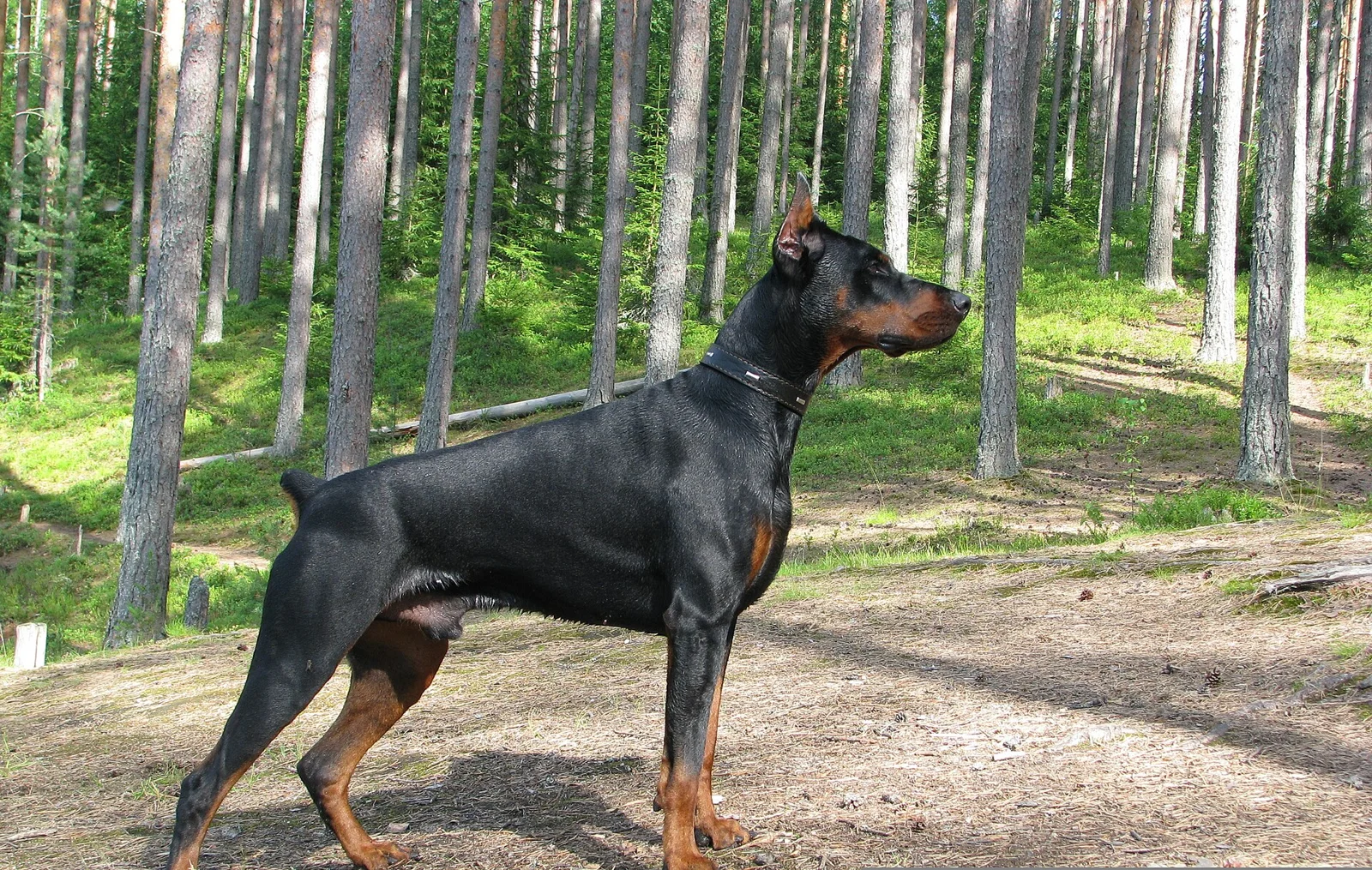
Illustrative photo · MoPS1ck · CC BY-SA 4.0