Archive date follows the original topic. Independently written and reviewed by idoghome on October 29, 2026.
The map says the journey takes four hours. It does not include finding a quiet place for the dog to toilet, cleaning a muddy paw or discovering that the planned lunch stop does not allow dogs. Add those things before you decide how much driving makes sense in a day.
A dog-friendly road trip is partly about the destination and partly about making the hours between destinations manageable. Plan for the dog who is travelling with you, not the imaginary one who sleeps through every journey.
Check the travel setup before packing
Fit a suitable restraint or secure crate according to its instructions, and make sure luggage cannot fall into the dog's space. Keep ventilation clear. If you are comparing vehicle safety equipment, look at what testing has actually been carried out rather than relying only on words such as “travel safe.”
The Center for Pet Safety provides information about pet travel products and independent testing. Check the exact model, size and installation requirements relevant to a product; a claim about one item should not be assumed to cover an entire brand.
Choose stops you can use with the dog
Look for safe places away from fast-moving traffic, with a suitable area for a short walk. Have a second option in case the first is unexpectedly busy or closed. Attach the lead before opening the car door and keep control while people unload bags.
Avoid planning meals that require leaving the dog unattended in the vehicle. Take food with you, use genuinely suitable dog-welcoming places or arrange your stops so someone remains responsibly with the dog outside the car. A shaded parking space is not a care plan.
Keep one small bag within reach
Water, a bowl, waste bags, a towel and any essentials for the next stop should not be buried under suitcases. Put clean and used items in separate compartments. Keep medication protected and follow its storage instructions, including temperature requirements.
Take familiar food and the equipment your dog already uses comfortably. A road trip is a poor time to discover that a new bowl tips over or a new harness rubs. If you have purchased something specifically for the trip, try it on ordinary days first.
Let the dog's day affect the distance
Some dogs settle after a break; others find repeated loading and unloading tiring. Notice how your dog responds and adjust. If they seem unwell or unusually distressed, stop safely and seek appropriate advice rather than concentrating on reaching the hotel at the planned time.
Leave room in the itinerary for a shorter driving day. Booking every evening at the maximum distance you think you can cover makes it harder to respond to weather, road closures or the dog's needs. Flexible plans are especially useful on the first longer trip together.
Finish the day quietly
On arrival, check the accommodation's exits and give the dog time to investigate safely. Set out familiar bedding and water before launching into another activity. A short, calm walk may be more welcome than a busy restaurant after hours on the road.
Keep a note of stops that worked and equipment you did not use. The next trip will become easier because you know your own routine, not because you found a universal road-trip formula. Sometimes the best improvement is simply driving less and staying in one place longer.
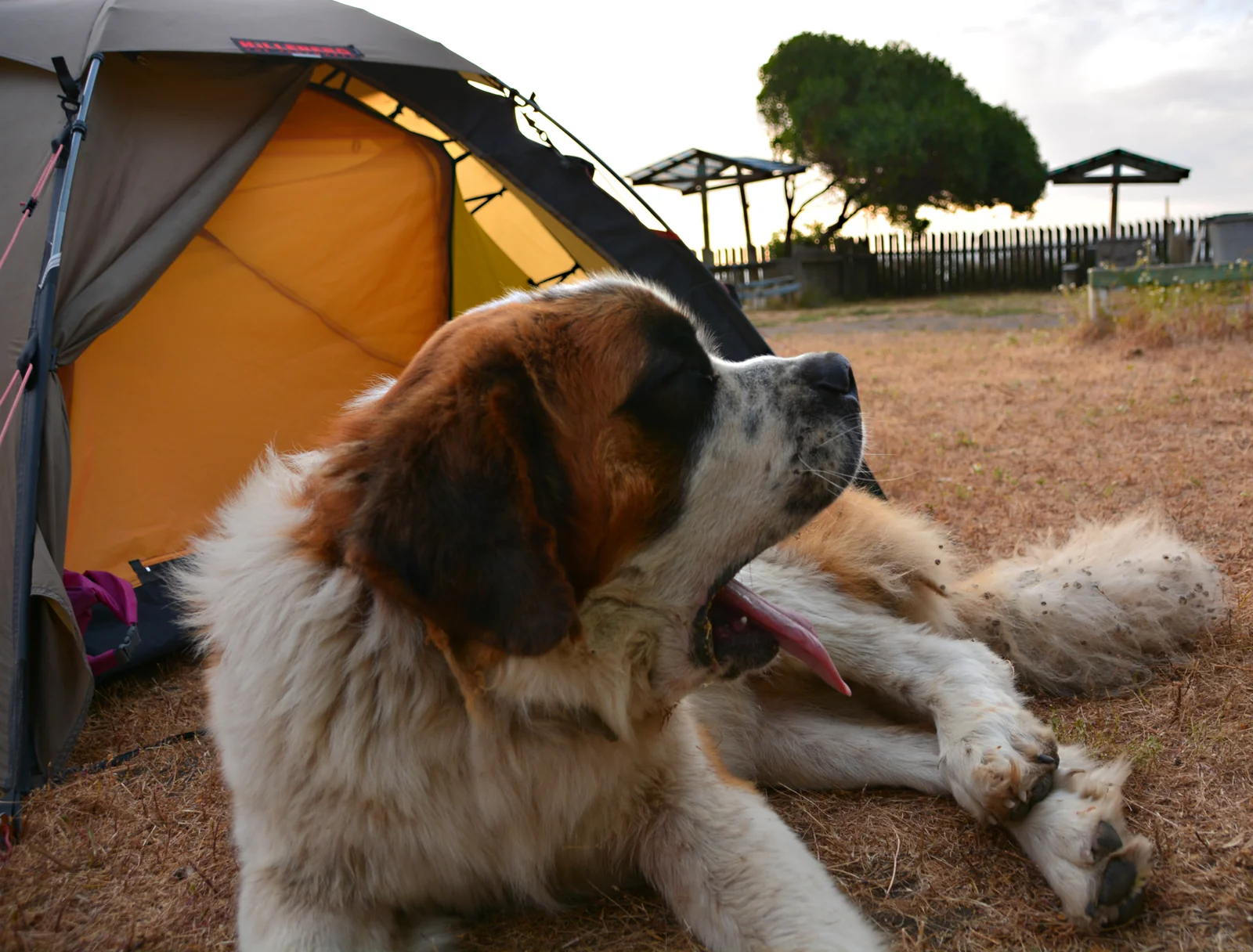
Illustrative photo · Gerrit Burow · CC BY-SA 3.0