Archive date follows the original topic. Independently written and reviewed by idoghome on October 29, 2026.
A dog who used to pace through dinner lies down for thirty seconds. A nervous dog steps towards their harness instead of leaving the room. Neither moment is likely to become a spectacular video, but both can matter to the people living with that dog.
Progress is easier to see when you stop asking whether your dog has “transformed” and start recording what happened. You do not need a spreadsheet full of scores. A few specific notes will do. Keep them in one place so you can compare similar sessions.
Describe the starting point fairly
Write what you can observe without giving your dog a character judgement. “Barked when a delivery person came through the gate” is useful. “Was impossible again” does not tell you much about the situation or what to change.
Add the setting: time of day, distance from a distraction and who was present. Note whether your dog had just woken up, finished playing or come back from a difficult walk. You are looking for patterns, not excuses.
Pick a smaller measure
If your eventual aim is a dog who settles while you eat, begin with something nearer. Can they approach a comfortable mat? Can they pause there? Can they remain relaxed while you sit in a chair?
These are separate steps. Dogs Trust's settling exercise offers a reward-based starting point. Do not skip to a busy restaurant because the mat exercise went well twice at home.
Use an example, not an invented success story
Here is an illustrative diary format, not a report about a real dog. Monday: “Looked at the mat, rewarded, then walked away.” Wednesday: “Stepped onto mat twice in a quiet room.” Friday: “Stayed near the mat while I sat down, then chose to leave.”
The entry does not need a happy ending. It needs enough detail to help you plan the next attempt. If Friday was harder because visitors were present, compare it with another visitor day rather than Monday's empty house.
Count comfort as well as performance
A still dog is not automatically a relaxed dog. Watch their whole body and the context. A dog who is tense, avoiding interaction or unable to take a break may need an easier setup rather than another repetition.
Dogs Trust's body-language guide can help you notice the difference between loose, comfortable behaviour and signs of worry. Keep any filming brief and incidental; do not recreate a stressful situation just to collect a comparison clip.
Change the plan when the notes tell you to
If a skill becomes harder across several easy sessions, consider whether the reward, environment or exercise needs changing. Sudden changes in behaviour, movement or willingness to be handled should be discussed with your vet. Persistent fear or aggression calls for individual professional support.
Read the diary after a couple of weeks. You may find a practical improvement you had stopped noticing, such as easier harnessing or a quicker recovery after a noise. That is worth keeping. Real training progress often looks like an ordinary day becoming a little easier.
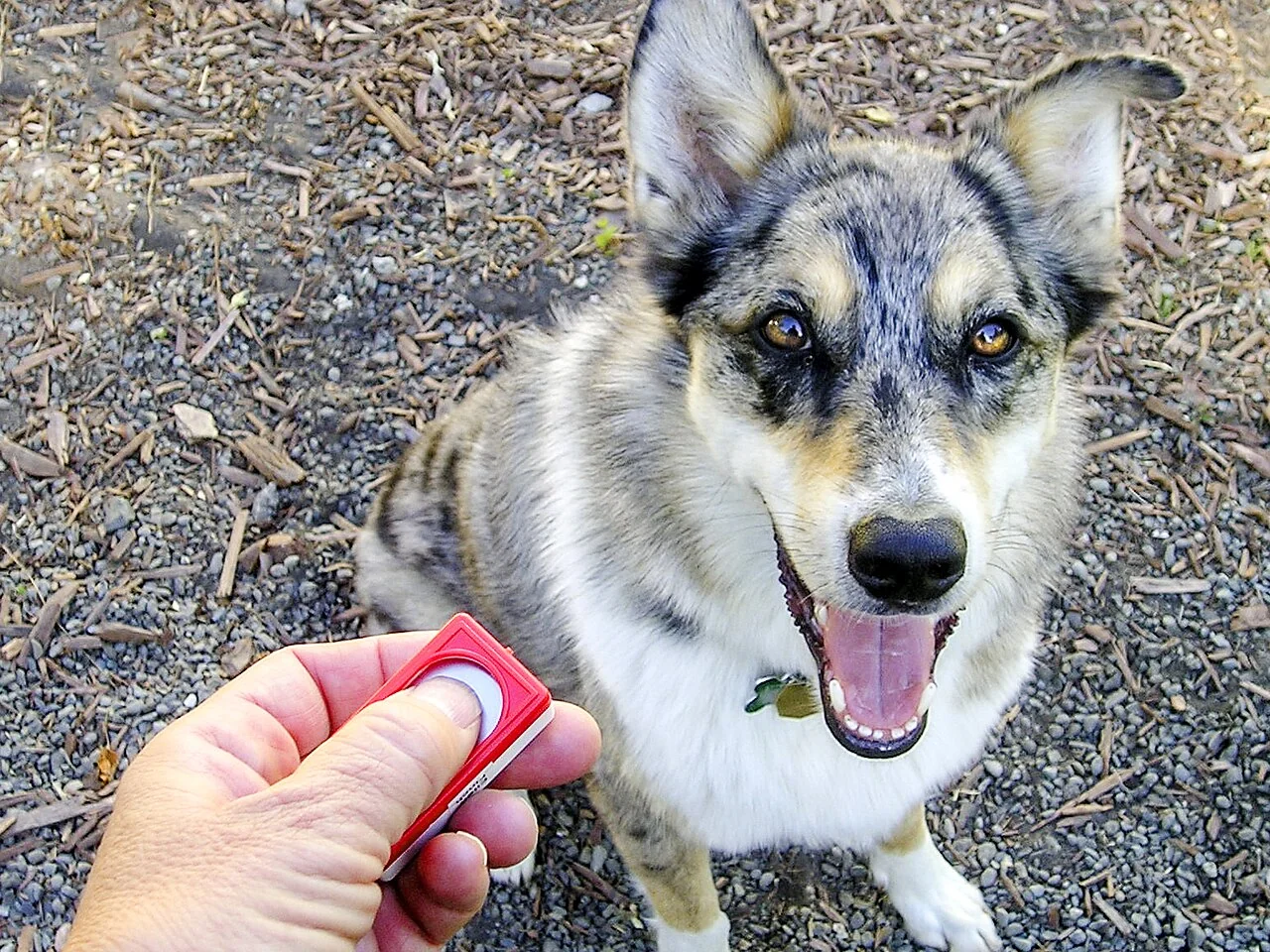
Illustrative photo · Elf (Ellen Levy Finch) at en.wikipedia · CC BY-SA 3.0