Archive date follows the original topic. Independently written and reviewed by idoghome on October 29, 2026.
When a dog loses mobility, the urgent question is often whether a wheelchair will help. First comes a veterinary diagnosis and a daily care plan. Sudden paralysis or a new inability to stand is an emergency, not a reason to order equipment and wait for delivery.
Once the dog is assessed, the practical work becomes clearer: comfortable rest, safe movement, skin care, toileting and activities the dog can still enjoy. A cart may become one part of that plan.
Leave the clinic with a workable routine
Ask the veterinary team to demonstrate lifting and support for your dog. Get written instructions about movement restrictions, medication, bedding, repositioning and skin checks. VCA's home-care guidance describes why these ordinary tasks require attention.
Toileting needs a specific discussion. Some dogs cannot empty the bladder normally even if bedding becomes wet. If assistance is required, have the team teach it directly and explain when to seek help. Do not attempt bladder expression from a written internet tutorial.
Set up a manageable home area
Choose accessible, washable bedding and secure flooring. Keep essentials nearby so care does not require repeated awkward carrying. Check skin where the dog rests or equipment touches, and report redness, sores, odour or discharge.
Use a shared care sheet for medicines, toileting, food and observations. Agree who does each task and arrange backup. Caregiver fatigue is a practical problem worth discussing early, not something to hide until the routine becomes impossible.
Assess a wheelchair with professional help
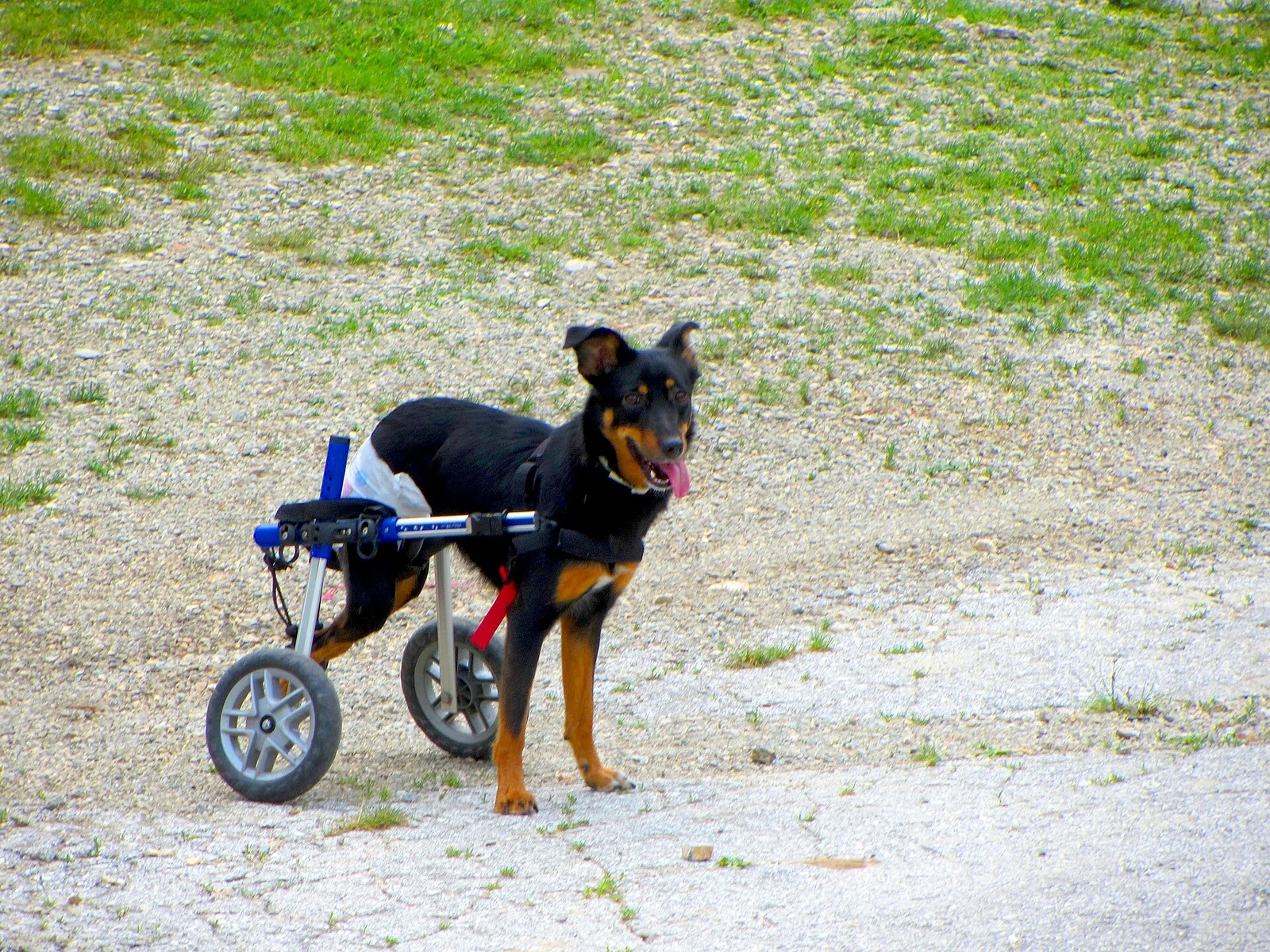
The University of Illinois rehabilitation service includes wheelchair fitting and adjustment among its approaches. Suitability depends on the dog's condition and the support required. Measurement, posture, remaining limb strength and skin protection all matter.
Introduce any approved equipment gradually on a safe surface with supervision. Follow the rehabilitation team's instructions about duration and use. A cart is not a place to leave a dog unattended or a substitute for comfortable rest. Stop and seek advice if the dog struggles, tires or develops rubbing.
Define progress in the dog's terms
Recovery videos and sporting achievements can be inspiring, but they are poor promises for an individual animal. Human para-athletes and disabled dogs have different choices and care needs. Avoid making walking again the only acceptable outcome.
Texas A&M's special-needs care guidance emphasises adapting care to the animal. Enjoyable sniffing, social contact, appetite and comfortable rest are meaningful observations alongside mobility.
Review quality of life and caregiver capacity regularly with your vet. Ask which changes are urgent and which belong at a planned recheck. A sustainable routine gives both dog and owner room to adjust without forcing each day to resemble somebody else's success story.
Before leaving the house, check access and transport arrangements so the dog can rest comfortably during the journey and at the destination.
Illustrative photo.